How Often Should Perth Homes Clean Their Windows? A Practical Guide
How often should you actually clean your windows? It is undoubtedly one of the most common questions our team hears from Perth homeowners—and the honest, practical answer is usually: far more often than most people think. Many people operate on the outdated assumption that an annual 'spring clean' is sufficient for residential glass. However, Perth's highly unique climate and geographical layout dictate a very different reality. Our city boasts a spectacular, sun-drenched Mediterranean climate, but the exact same conditions that make Perth one of Australia's most liveable cities also create a remarkably harsh environment for exterior glass. From the relentless coastal salt spray carried by the famous 'Fremantle Doctor' breeze, to the sticky, resinous eucalyptus pollen of our leafy suburbs, and the fine, abrasive red dust blown in from the Darling Scarp during intense summer easterlies—Perth windows are under constant environmental assault. In these conditions, exterior glass can transition from crystal clear to visibly dull, hazy, and damaged in just a matter of weeks. This comprehensive guide breaks down the correct schedule for residential window cleaning in Perth across different property types, helping you protect your home, maximize your natural light, and avoid costly permanent damage.
Why Perth Windows Get Dirty Faster Than Most Cities
Perth is geographically isolated and bordered by the vast Indian Ocean to the west and the arid outback to the east. This creates a unique atmospheric cocktail that rapidly degrades the cleanliness of your windows. During our long, hot, and dry summers, strong easterly winds frequently sweep across the Perth hills, picking up fine red dust and sand, depositing it directly onto suburban homes. When this dry dust settles on your windows, even a light morning dew is enough to turn it into a stubborn, muddy film. Simultaneously, the iconic afternoon sea breeze—the Fremantle Doctor—drags airborne salt particles kilometres inland. Salt is highly hygroscopic, meaning it actively attracts and holds moisture from the surrounding air. This constant damp, salty layer on your glass acts like a magnet for airborne pollution, vehicle exhaust particles, and general dirt. Furthermore, Perth's beautiful native flora, particularly our abundant eucalyptus trees and flowering gums, release substantial amounts of sap, resin, and pollen into the air. This sticky organic matter coats window panes and flyscreens, creating a hazy film that standard household glass cleaners simply cannot cut through. The combination of salt, dust, and sap creates a compounding effect, causing Perth windows to dirty at a significantly accelerated rate compared to cities like Melbourne or Sydney.
Recommended Cleaning Frequency by Property Type
Coastal Homes (Within 3km of Ocean)
We recommend professional cleaning every 6 to 8 weeks. If you live in a coastal suburb such as Cottesloe, City Beach, Scarborough, Trigg, or North Beach, your property is on the front line of salt exposure. Airborne salt deposits accumulate extremely rapidly on coastal glass. If left uncleaned, this salt undergoes a chemical reaction with the sun and the glass itself, leading to permanent etching and hard water staining. Homes in these premium suburbs must adhere to a strict, frequent cleaning schedule to prevent this irreversible damage and to maintain those uninterrupted, million-dollar ocean views.
Suburban Homes with Trees
We recommend professional cleaning every 8 to 12 weeks. Suburbs nestled in the Perth Hills like Kalamunda and Roleystone, or leafy, established inner-city suburbs such as Nedlands, Dalkeith, and Mount Lawley, face a different set of challenges. The primary culprits here are eucalyptus resin, tree sap, bird droppings, and seasonal pollen. These organic compounds are highly acidic. When baked onto the glass by the intense Perth sun, they can cause localized spotting and degradation of window seals. Quarterly cleaning is generally the sweet spot for staying on top of this organic buildup before it hardens.
Standard Perth Metro Homes
We recommend professional cleaning every 3 to 6 months. For standard residential homes located in the middle and outer rings of the Perth metropolitan area—places without extreme coastal exposure or dense, overhanging tree canopies—a biannual or quarterly clean is usually sufficient. A popular and effective strategy is to book one thorough clean in late November to prepare the home for summer entertaining and Christmas (often bundled with a service to clean solar panels in Perth before peak summer generation), and another clean in late May to wash away the accumulated summer dust before the winter rains set in.
Commercial Properties
We recommend professional cleaning on a monthly or fortnightly basis. For Perth cafes, retail shopfronts, restaurants, and office buildings, presentation is intrinsically linked to business success. Dirty, finger-printed glass creates a poor impression for passing foot traffic and potential customers. Commercial properties, particularly those situated on busy arterial roads like Albany Highway, Stirling Highway, or in the Perth CBD, are subjected to high levels of diesel particulates and traffic film. Frequent, scheduled cleaning is necessary to maintain a professional, welcoming facade and to comply with strict body corporate or strata maintenance standards.
Homes with Bore Water Systems
We recommend professional cleaning every 4 to 8 weeks, coupled with immediate spot cleaning. Many Perth homes rely on groundwater bores to maintain their lawns and gardens over summer. Unfortunately, Perth bore water is notoriously rich in iron, calcium, and magnesium. If your reticulation system oversprays onto your windows, it will leave severe hard water spots and rust-coloured stains. These mineral deposits bond to the glass remarkably fast. If you have bore water overspray issues, you must clean your windows much more frequently and address the reticulation alignment to prevent permanent mineral etching.
Signs It's Time to Book - Regardless of Schedule
- Visible streaks, cloudiness, or a milky haze that doesn't wipe off: This is a major red flag. It typically indicates that mineral deposit buildup (often from bore water or salty rain) has begun to bond with the porous surface of the glass. This requires immediate professional treatment using specialized hard water stain removers, not just a simple wipe-down with standard detergent.
- Water spots after rain that refuse to clear: Clean glass is naturally hydrophobic, meaning rainwater should sheet off it relatively easily. If rain is leaving distinct, persistent circular spots on your windows, it is a clear sign that a layer of salt, dirt, or hard water minerals has formed on the glass, giving the rainwater something to cling to and dry against.
- Frames, tracks, or sills with visible mould, green algae, or heavy grime: Window maintenance is about more than just the glass. Moisture trapped by dirt in your window tracks creates a perfect breeding ground for toxic black mould. This mould can quickly spread indoors, posing a serious respiratory health concern. It requires proper, professional extraction and sanitisation, not just a superficial wipe.
- Noticeably reduced natural light indoors: If your living spaces feel surprisingly dim, dreary, or less vibrant even on perfectly sunny Perth days, the culprit is likely your windows. A uniform film of dust and pollution can easily block 10% to 20% of incoming natural light. You will be astounded by how much brighter and larger your home feels after a professional clean.
The Cost of Waiting Too Long
Treating window cleaning as an optional, infrequent luxury is a false economy that ultimately costs Perth homeowners dearly. Windows that are neglected for 12 months or more in Perth's harsh conditions don't just look visually unappealing—they are actively developing permanent, structural damage. The microscopic surface of glass is actually porous, like a sponge. When mineral deposits from hard tap water, bore water, or coastal salt are allowed to sit on the surface, they undergo a process called 'silicate bonding.' They chemically fuse with the glass itself. Once this occurs, no amount of scrubbing, soap, or high-pressure washing will remove the haze. The only solutions are highly specialized, expensive acid restoration treatments, or in extreme cases, complete glass replacement. Replacing a single large double-glazed pane or sliding door in Perth can easily cost anywhere from $500 to over $2,000. When you compare these exorbitant replacement costs to the modest price of a regular, scheduled professional clean, it becomes crystal clear that regular maintenance is always the cheaper, smarter option.
The Best Time of Year to Clean Windows in Perth
A common myth is that you shouldn't clean windows before it rains. In reality, rain doesn't make clean windows dirty; it's the dirt already on the windows that rain turns into mud. Therefore, keeping your windows clean year-round is highly beneficial. However, strategically timing your major cleans in Perth can yield fantastic results. Late Spring (November) is arguably the most popular time for a comprehensive clean. This washes away the heavy pollen, spring rain spots, and lingering winter grime, leaving your home sparkling just in time for summer barbecues, Christmas parties, and peak entertaining season. Late Autumn (May) is the second ideal window. After the long, dry summer, your windows, frames, and tracks will be packed with red dust, sand, and cobwebs. Cleaning them before the heavy winter rains arrive ensures that water can drain freely through your window tracks, preventing internal leaks, and maximizes the limited natural light available during the shorter, gloomier winter days.
Why Pure Water Cleaning is Best for Perth Conditions
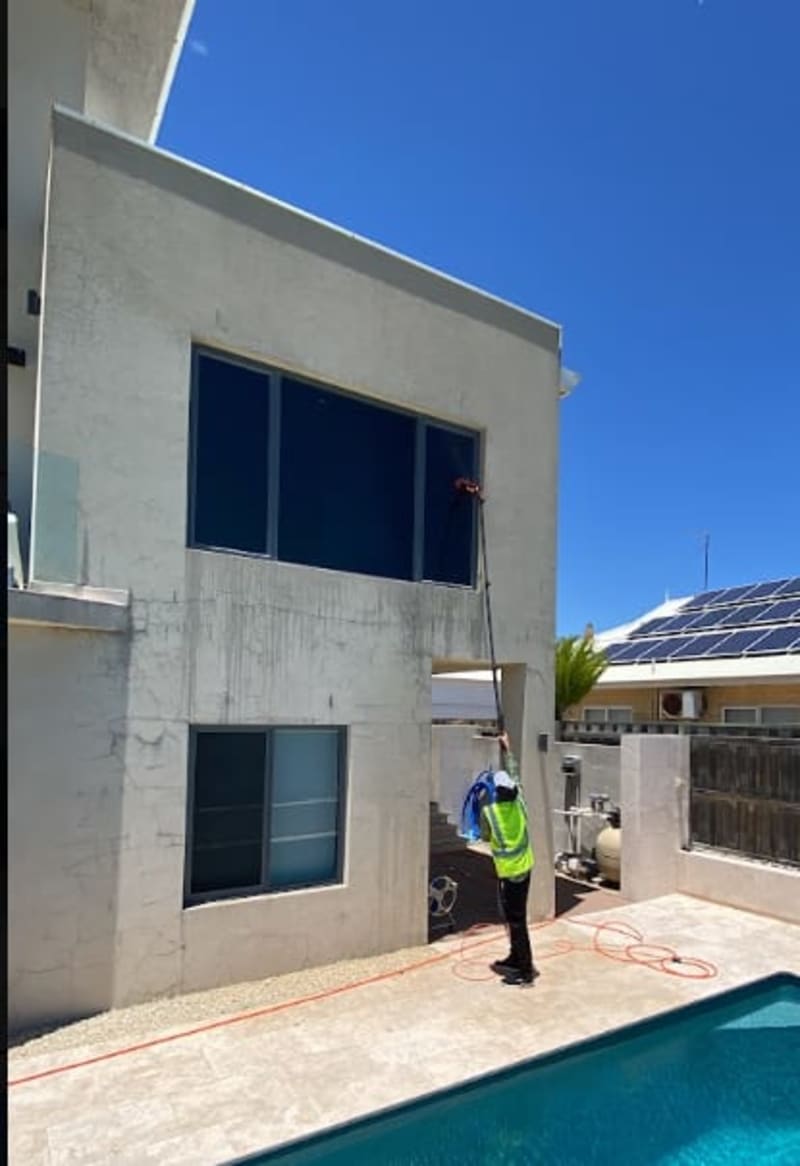
Traditional window cleaning using a squeegee and soapy water has major drawbacks in Perth. Standard tap water in Western Australia has a relatively high Total Dissolved Solids (TDS) count, full of calcium and magnesium. Furthermore, the detergents used in traditional cleaning inevitably leave behind a microscopic, sticky residue on the glass. In our dusty environment, this sticky residue acts like a dust magnet, causing your windows to get dirty again almost immediately. At Aspect Window Cleaning, we utilize state-of-the-art Pure Water technology. We run Perth tap water through a multi-stage reverse osmosis and deionization filtration system, stripping out 100% of the minerals and impurities. We then use carbon-fibre water-fed poles to scrub the glass, frames, and sills, rinsing them with this completely pure water. Because the water contains absolutely no dissolved solids, it dries flawlessly spotless and streak-free without the need for a squeegee. More importantly, it leaves zero sticky chemical residue behind, meaning your windows stay cleaner, clearer, and brighter for significantly longer in Perth's dusty climate.
For the vast majority of Perth homeowners, a professional, comprehensive clean twice a year should be considered the absolute minimum baseline for property maintenance. However, if your home is situated near our beautiful coastline, surrounded by heavy tree canopies, or exposed to bore water reticulation, you must adopt a more frequent schedule to prevent irreversible etching and damage to your glass. The smartest and most stress-free approach is to establish a recurring, automated cleaning schedule rather than waiting until your windows look visibly dirty and the damage has already begun to set in. To understand the consequences of delaying care, explore our guide on hidden damage dirty windows cause to Perth homes. Aspect offers trusted residential window cleaning in Perth with flexible, affordable recurring bookings tailored to your property's needs across the metropolitan area. Contact our friendly team today to set up a customised schedule that ensures your home looks its absolute best, all year round.
Looking for Professional Window Cleaning in Perth?
Whether you are preparing a property for sale, dealing with stubborn bore water mineral etching, or scheduling regular maintenance, our team delivers guaranteed streak-free results across all 370+ Perth suburbs.
Liked this result?
Get the same sparkling finish for your home.